A programme for songwriters who want to work professionally with songwriting and performance.
For those who want to immerse themselves in developing their musical expression through lyrics, music, and performance and create a broad-based artistic career – independently and in collaboration with others.
| The study programme opens for applications | 21 October 2026 |
| Information meeting at RMC | 26. October 2026 at 17:00-19:30 |
| Deadline for online application | 1 December 2026 at 12:00 noon CET |
| 1st round You are not present | 4-5 January 2027 |
| Outcome of the 1st round by email | 15 January 2027 |
| 2nd round You must attend at RMC | 27-29 January 2027 |
| Outcome of 2nd round by email | 17 February 2027 |
| Online meeting for applicants offered a study place | Februar 2027 - TBA |
| Start of study | 16 August 2027 |
Do you want to immerse yourself in songwriting both as a creator and performer – while also being able to create a sustainable working life as an artist and teacher? And would you like to meet students from other educational programmes and become part of an open, inspiring study environment?
Then the Bachelor programme in Performance – Songwriting at RMC offers you the best opportunities.
The programme is for you if you want to write songs, perform on stage, and create an artistic career that can unfold broadly in the music world. You will learn to combine the craft of songwriting with performance – and to develop your own artistic expression.
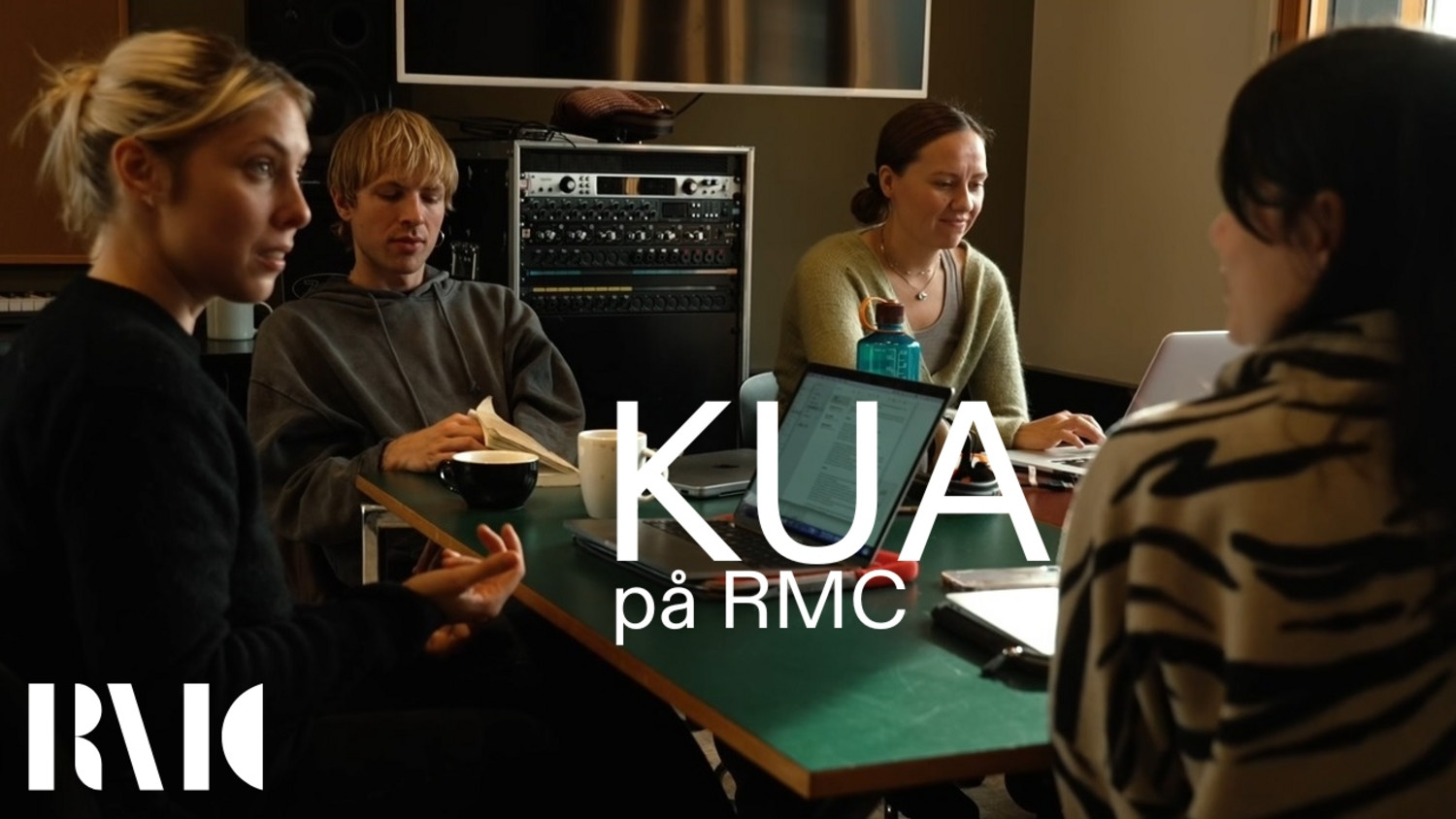
Central to the programme is the subject Artistic Development Practice (KUA), where you create new music based on your own ideas and your own practice. You will learn to test and develop new artistic methods, to document and communicate your process to others – and to reflect on both your own and others' work. All this takes place in an open and creative study environment, where reflection, feedback and shared learning are an important part of the teaching.
You will develop your skills in both the textual and musical dimensions of songwriting, with a focus on the song's narrative, form, and expression. You will be supported in developing your approach to performance and working on how your songs can connect with an audience. At the same time, you will learn to relate your music and artistic practice to the wider world across music and society, and you will gain experience in reflecting on the role of music in different cultural and social contexts.
An important element of the programme is the field of music pedagogy, where you will work on creating frameworks for the musical development of others. You will learn to develop teaching methods and collaborative approaches, and you will gain skills in building healthy working communities. In this way, you will strengthen your ability to share your knowledge and artistic practice with others – both as a teacher and as a co-creator of communities in the music world.
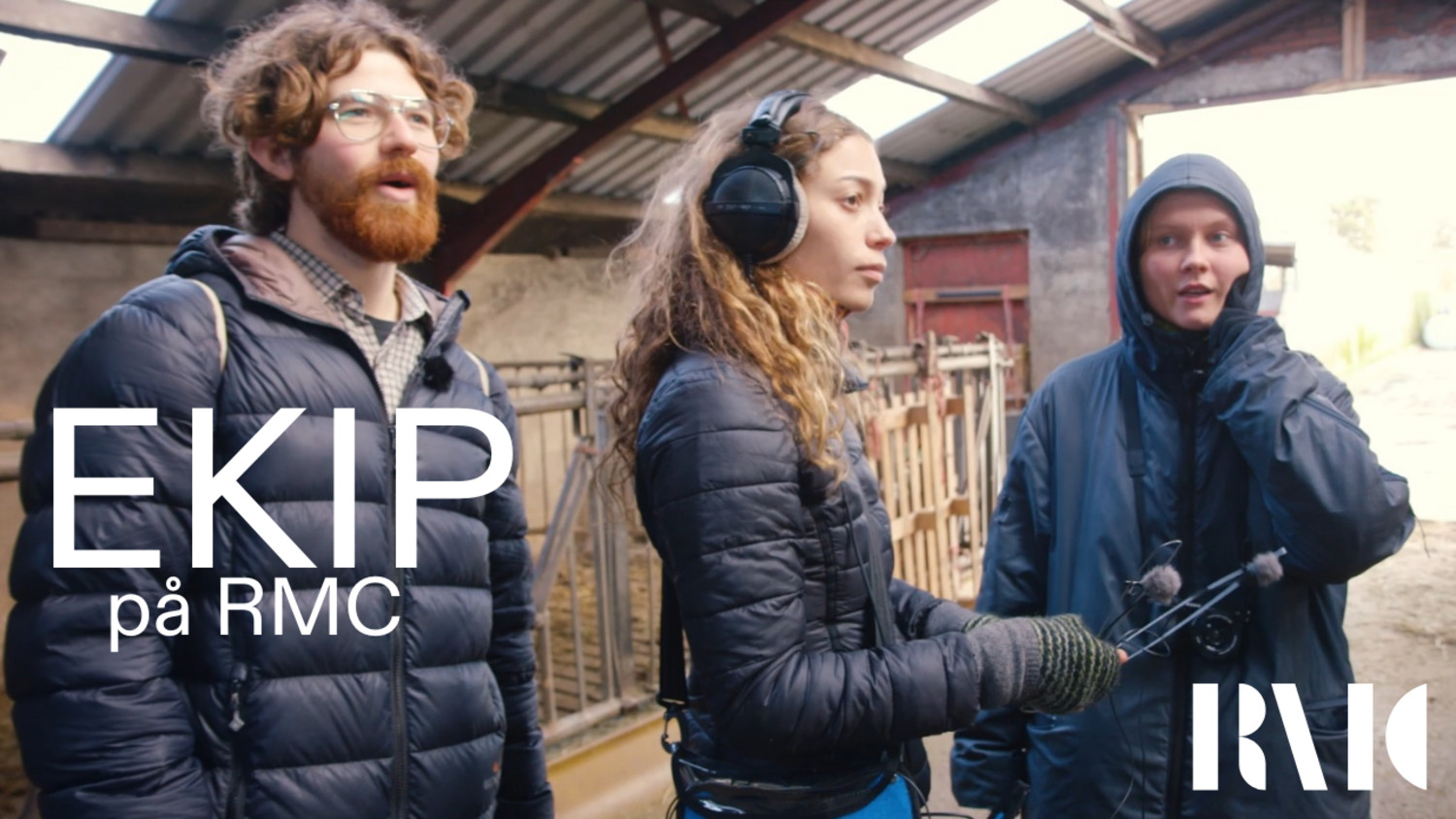
During the programme, you will participate in the External, Collaborative, Integrated Project (EKIP) course, where you and your fellow students will develop and implement a project in collaboration with partners from the music and cultural scene or other sectors of society. Here you will test your skills outside the school, build networks, and gain experience in how your artistic and pedagogical practice can create value and change in your encounters with other people and environments.
As a student, you will experience a mix of individual teaching, group courses, projects, and independent work. You will meet students from other programmes and courses, with an emphasis on creating an inspiring community and study environment at RMC.
After completing the Bachelor programme, you will have a strong artistic foundation as a songwriter and performer. You will have established a network that you can build on in your professional life, where you will be equipped to create artistic projects, both individually and in collaboration with others. The programme also provides you with the basis for applying for a Masters degree programme at RMC or other conservatories in Denmark and abroad.
The programme lasts three years (180 ECTS), is a full-time study with compulsory attendance, and concludes with an independent Bachelor project, which you present at a public graduation concert on one of RMC's stages.
In the dropdown menu Study Programme, you can read more about the programme's subjects, structure, and content.
Anyone can apply for the Bachelor programme Performance – Songwriting. No specific background is required, and all genres and musical expressions are welcome.
You must perform as the vocalist on all submitted music and at the entrance examination.
All applicants will have their applications assessed during the first round of the entrance examination
You apply online via Studieoptag, where you create a profile, complete the application form and upload your material for both the first and second round of the entrance examination.
The application deadline is 1 December at 12:00 noon CET.
The application fee is 600 DKK.
The programme normally admits 8 students.
Find out more about the requirements for the material in the section About the application.
Find out more about the entrance examination in the section About the entrance examination.
When applying for the programme, you must create a profile on Studieoptag, fill in the application form, and upload your material for the entrance examination.
You must upload material for both the first and second rounds before the application deadline.
The application must contain
Portfolio A for round 1
- 2 music examples which you believe provide a relevant insight into your practice as a creative, performing songwriter. One of the music examples must be a video recording. The music examples may be excerpts from longer works. (file formats: video: mp4, audio: mp3, total duration 7–8 mins).
- Lyrics for the music examples. (file format: PDF)
If the lyrics are in languages other than Danish, Swedish, Norwegian or English, you must include a translation into Danish or English. - Sheet music/scores/graphic notation, if this is part of the way you work. (file format: PDF)
- Supplementary information with brief descriptions of how you have worked with the music and lyrics (maximum 500 keystrokes per music example), and with a precise specification of your own and, where applicable, others’ roles in connection with each of the uploaded music examples (maximum 250 keystrokes per music example). If the examples are extracts from longer works, this must be stated.
The following applies to portfolio A
You must have composed the music and written the lyrics yourself; no co-writes are permitted.
One of the music examples must be a video recording documenting a live performance – with or without an audience – for example from a rehearsal room, a studio or a stage.
The recording must be a single take from a fixed camera (e.g. a mobile phone) without post-production editing, i.e. without cuts or overdubs.
The second music example must be an audio recording.
Portfolio B for round 2
- 2–3 music examples which you believe provide a relevant insight into who you are as a creative, performing songwriter. The music examples may be excerpts from longer works. (file format: mp3, total duration 7–8 mins)
- Lyrics for the music examples. (file format: PDF)
If the lyrics are in languages other than Danish, Swedish, Norwegian or English, you must include a translation into Danish or English. - Sheet music/scores/graphic notation, if this is part of the way you work. (file format: PDF)
- Supplementary information with brief descriptions of how you have worked on the music and lyrics (maximum 500 keystrokes per music example), and a precise specification of your own role and, where applicable, the roles of others in connection with each of the uploaded music examples (maximum 250 keystrokes per music example). If the examples are excerpts from longer works, this must be stated.
The following applies to portfolio B
You must have composed the music and written the lyrics yourself; however, one music example (max. 3 mins) may have been written in collaboration with others.
The music examples in Portfolio B must not be identical to the material you have uploaded to Portfolio A.
The following applies to both portfolios
You must perform as a singer yourself and be artistically responsible for the music. You are also welcome to perform as an instrumentalist.
You are welcome to use other musicians and sound engineers.
All musical expressions are welcome.
Overview of activities
- Selected music-related activities and projects over the past three years that have been important to your personal development and which you believe are relevant to the study programme you are applying for.
- Describe up to 6 music-related activities.
Application fee
The application fee is 600 DKK. This fee covers part of RMC’s costs associated with processing applications and organising examinations. The fee is non-refundable once the application deadline has passed.
Application deadline
The deadline for applications is 1 December at 12:00 noon CET. If this date falls on a Saturday, Sunday or public holiday, the application deadline is 12:00 noon CET on the next working day.
See also the FAQ on application and entrance examination in the drop-down menu.
The entrance examination for the Bachelor programme in Performance – Songwriting takes place in two rounds. All applicants will have their applications assessed in the first round of the entrance examination.
You must upload material for both the first and second rounds before the application deadline.
Round 1
You will not be present in person for the first round of the entrance examination.
Based on your Portfolio A, an assessment panel consisting of two examiners will make an overall assessment based on the following criteria:
- To what extent you can create, perform and communicate music characterised by an independent artistic expression.
- The extent to which you possess the songwriting skills necessary to create your music and your artistic expression, including skills in developing lyrics, melody, harmony, rhythm, form and arrangement.
- The extent to which you possess the vocal skills necessary to interpret and perform your songs, including skills in tone, phrasing, articulation and dynamics.
Assessment is based on a 100-point scale, which is a subdivision of the 7-point scale. You must achieve a minimum of 40 points, corresponding to 02 on the 7-point scale, to pass the examination. The assessment is based on the level required to commence the programme.
RMC usually selects two to three times as many applicants for the second round as there are places available on the programme. Everyone will be notified by email. Applicants who progress to the second round will also receive information about the content and timing of the examination, as well as a songwriting assignment for the second round.
No feedback is provided to applicants who do not advance to the second round.
Round 2
The second round consists of an examination at RMC, which you must attend in person.
In the second round, the assessment is carried out by an assessment panel consisting of four examiners.
The examination comprises a concert, a presentation of a set assignment and an interview, and lasts 35 minutes including changeovers.
You must not bring anyone else with you to the presentation of the assignment or to the interview.
Concert with your own group (a minimum of one and a maximum of four other people who sing or play an instrument) (10 minutes).
- The songs presented at the concert must be composed and written by you, including the lyrics. You may choose to incorporate musical material from portfolios A and B into the concert if you wish.
- You must perform as a singer yourself, and there must be a minimum of one and a maximum of four other people who sing or play an instrument. You are also welcome to perform as an instrumentalist.
- You must take artistic responsibility for the music yourself.
- All musical expressions are welcome.
Live presentation of the songwriting assignment sent to you. The performance must include both a performance of the musical result and a verbal description of your work. (5 minutes)
Interview between you and the assessment panel, based on your concert, the songwriting assignment and the material in your Portfolio B (20 minutes).
Based on your concert, your presentation, your submitted Portfolio B and the interview, an overall assessment will be made according to the following criteria:
- To what extent you can create, perform and communicate music characterised by an independent artistic expression;
- The extent to which you possess the songwriting skills necessary to create your music and your artistic expression, including skills in developing lyrics, melody, harmony, rhythm, form and arrangement;
- The extent to which you possess the vocal skills necessary to interpret and perform your songs, including skills in tone, phrasing, articulation and dynamics.
- The extent to which you can apply relevant songwriting methods to create, refine and develop musical material;
- The extent to which you can reflect on your own artistic practice, processes and methods;
- The extent to which you can relate your artistic practice to different contexts (e.g. genres, styles, traditions, forms of expression, venues, artistic environments, other songwriters, composers, artists, musicians, methods, etc.);
- To what extent you can reflect on your own learning and development and what you need to learn;
- To what extent you can reflect on your experiences of collaborating with others.
Assessment is based on a 100-point scale, which is a subdivision of the 7-point scale. You must achieve a minimum of 40 points, equivalent to 02 on the 7-point scale, to pass the examination. The mark is awarded in relation to the level required to commence the programme.
Admission
Applicants who have achieved the highest scores in the assessment in the second round will be offered a study place on the programme.
When deciding on admissions, the conservatory may take into account the needs of the music scene.
Normally, 8 students are admitted to the programme. Due to the limited number of places, the conservatory may have to turn down applicants even if they have passed the entrance examination.
You will be notified by email whether you have been admitted.
All applicants who are not admitted will be offered a brief 10-minute telephone conversation with the examiner in charge, who will explain your assessment result in more detail based on the assessment criteria used.
A limited number of qualified applicants who are not admitted due to a limited number of places may be placed on the waiting list.
Until 1 July, applicants on the waiting list may be offered a study place if places become available.
See also the FAQ on application and entrance examination in the drop-down menu.
Questions about the application
Who can apply?
Anyone can apply for the Bachelor programme in Performance – Songwriting, and their applications will be assessed in the first round of the entrance examination. All genres and forms of expression are welcome, and no specific educational background is required.
How do I apply?
You apply online via Studieoptag, where you create a profile, fill in the application form, and upload your files.
When is the application deadline?
1 December at 12:00 noon CET. If the deadline falls on a weekend or public holiday, it will be moved to the next working day.
Can I apply for more than one programme at RMC?
Yes, you can apply for multiple programmes at RMC. The entrance exams are not coordinated.
Can I apply to other conservatories?
Yes, RMC's entrance examination is independent of other conservatories. You are welcome to apply to multiple places - including multiple programmes at RMC - but the entrance examinations are not coordinated.
Is there a fee for applying?
Yes, the application fee is 600 DKK. This covers part of RMC’s costs for the examinations and is non-refundable. If you are applying for more than one programme, you must pay the fee for each programme you apply for.
What should the application contain?
You can read about this in the section About the application in the drop-down menu.
Are there any requirements regarding genres and musical expressions?
No. All genres and musical expressions are welcome.
Do I have to perform on the material I upload?
Yes, you must perform as a singer. You are also welcome to perform as an instrumentalist.
Do I need to have composed the music?
All material must be composed and written by you, including lyrics. Co-writes are not allowed, but one music example (max. 3 min.) in portfolio B may be written in collaboration with others, including lyrics.
Do other musicians need to be featured on the material I upload?
No, this is not a requirement. You can choose to upload music examples also featuring other musicians and/or where you perform solo.
Do I need to submit lyrics?
Yes, you must upload lyrics to the music examples.
Do I need to submit sheet music or graphic notation?
You can upload sheet music/scores/graphic notation if it is part of your work.
What if my music examples are longer than the specified number of minutes?
You must select and, if necessary, edit the material yourself so that the total playing time does not exceed the specified number of minutes.
Can the portfolio for the second round contain the same material as the music examples uploaded for the first round?
No. The portfolio for the second round must consist of new material compared to the first round.
What file format should the music examples be uploaded in?
Video: mp4
Audio: mp3
Can I upload one long audio recording with all the music examples in portfolio B?
No. You must upload one audio file (mp3) for each music example.
Can I edit different videos together or make overdubs in portfolio A?
No, the video must be an unedited live recording, made in one take.
Can I make an excerpt from a longer take in portfolio A, for example by shortening it at the beginning or end?
Yes. You may shorten the video at the beginning and/or end to fit the duration you want to upload, as long as you do not edit several different parts together.
Can the video zoom in and out on me a little while I am performing in portfolio A?
Yes, as long as it is filmed from a single point camera.
What does "single point camera " mean?
It means that only one camera is used, that the camera is fixed in one position, and that the camera does not change position.
Can the accompanying layers in the music be electronic or pre-recorded in the live recording?
Yes, as long as there is no overdubbing or editing afterwards.
Can the video for portfolio A be recorded on multiple audio tracks and mixed afterwards?
Yes, you may record the video on multiple audio tracks and then mix them together into a stereo or mono track, as long as it is a live recording without subsequent overdubs and without cuts or crossfades between different takes.
Can audio from multiple takes be mixed in the live recording?
No. Everything must be recorded in one take.
Can there be overdubs on the live recording?
No, it must be a live recording without subsequent overdubs.
What if my music examples are longer than the specified number of minutes?
The time frame is the same for everyone and must be adhered to. The panel will not evaluate more than the specified minutes of music examples. If you do not stay within this time frame, it will affect your overall assessment, as you have not demonstrated that you can prioritise your material in order to provide a relevant insight into your practice as a songwriter and performer.
Can the live recording be made at my home? And can it be without an audience?
Yes, there are no requirements regarding where it is recorded or whether there is an audience or not.
Can I sing or play covers?
No.
Can fellow musicians in my application submit the same video in for their application?
Yes, if they believe it represents them in the best possible way. Please note that all applicants must be artistically responsible for their own submitted music examples.
Can I use sound effects in my live performance?
Yes.
Can I use samples (e.g., from Splice)?
Yes, if it is part of your music and your artistic practice.
Can I use samples or material that may be similar to other people's works?
Yes, the entrance exam is not considered a public performance, so there are no legal issues regarding copyright.
Can the use of samples affect my assessment?
Yes. The panel may assess how your practice will work professionally in the future. If your work is based on approaches to copyright that make it impossible to share the music in a professional context, this may be included in the assessment.
What is an activity overview?
In the overview of activities, you must describe up to six selected music-related activities and projects from the last three years relating to creating music, performing music, producing music, teaching music, promoting music, pursuing music studies, and other activities within the music world that have been important to your development and which you believe are relevant to the study programme you are applying for. The application form itself provides a template for describing these activities.
Questions about the entrance exam
Who will be invited to the entrance exam?
All applicants for admission to the Bachelor programme in Performance – Songwriting will have their applications assessed in the first round of the entrance examination.
How is the entrance examination structured?
You can read about this in the section About the entrance examination in the drop-down menu.
How am I assessed in the first round?
You can read about this in the section About the entrance examination in the drop-down menu.
How am I assessed in the second round?
You can read about this in the section About the entrance examination in the drop-down menu.
Are grades given in both rounds?
Yes Grades are given on a 100-point scale, which is a subdivision of the 7-point scale. The assessment is given in relation to the level required to commence the programme.
How many points do I need to pass a round?
You must obtain at least 40 out of 100 points to pass.
How many applicants move on to the second round?
RMC usually selects 2-3 times as many applicants for the second round as are admitted to the programme. Everyone will receive a response by email. Applicants who advance to the second round will also receive information about the content and timing of the examination.
Practical questions about the entrance examination
What language is the entrance exam conducted in?
The exam is usually held in Danish but can be conducted in English if you do not speak Danish.
What happens if I get sick on the day of the entrance exam?
If you fall ill, you may be allowed to sit a make-up exam. This requires a medical certificate, which RMC must receive no later than 3 working days after the exam date. RMC will set the date for the make-up exam, and you will be notified as soon as possible. You cannot choose the date yourself, and you must pay for the medical certificate yourself.
What equipment is available in the examination room?
In the entrance examination room you find:
- Screen (HDMI)
- L’Acoustic PA + Allen & Heath ZED-12FX mixer (room U210 & 211)
- 18” BD jazz drum set
- 20” or 22” BD rock drum set
- TC Electronic RH450 Bass Head + 2 x 12” cabinet or Orange Terror Bass 1000 Bass Head + 4 x 10” cabinet
- AER Amp Two double bass combo
- Fender Blues Deluxe, Deluxe Reverb or Hot Rod Deluxe guitar combo
- Orange Rockerverb 50 combo
- Yamaha or similar grand piano
- Bag of cymbals + clutch
- Shure SM58 microphones (5 available)
- Microphone stands
- Music stands
- Keyboard stand
- Minijack to mixer
- Jack and XLR cables
- Special adapters are not available – bring your own.
Or similar. We reserve the right to make changes if necessary.
If you wish to use any other equipment, you must bring it yourself, but please note, that you have very limited time for setup.
Do I need to bring any equipment for the second round entrance exam?
If you need any equipment, such as instruments, pedals, or amplifiers, that is not included in the above gear list, you must bring it yourself. Your fellow musicians must bring their own instruments and equipment. Just be aware that you have limited time to set up the equipment and to clear the room after the examination.
How long will I have access to the examination room for setup before the examination starts?
The exam room will be available for approximately 30 minutes before the entrance exam starts.
How much time will I have to clear and leave the room after the examination?
You will have approximately 15 minutes.
Can other people be present during the interview in the second round?
No, you not allowed to bring other people to the interview.
Do I have to perform as a singer or instrumentalist at the concert?
You must perform as a singer, and there must be a minimum of one and a maximum of four other people who sing or play an instrument. You are also welcome to perform as an instrumentalist.
Do I need to bring other musicians/accompanists to the concert?
Yes, the concert must include a minimum of one and a maximum of four other people who sing or play an instrument.
Do sound technicians count towards the four musicians/accompanists I am allowed to bring?
Yes.
How does the concert in the second round work?
You will play a concert for the assessment panel, which consists of four examiners. You are artistically responsible for how your music is performed in the rehearsal room.
Can I use electronic or pre-recorded elements if I perform my works live?
Yes, as long as it is clear how you work artistically with the material.
What is the songwriting assignment for the second round?
You will receive a short songwriting assignment prior to the second round, which you will prepare before the entrance exam and perform live at the entrance exam itself (3 minutes).
What is the interview in the second round about?
The interview will be based on your concert, songwriting assignment, your portfolio B and your activity overview.
After the entrance examination
How many applicants are admitted?
Normally 8 students per year group.
Can I get feedback if I am not admitted?
Yes, you will be offered a brief telephone conversation with the leading examiner about your assessment.
However, this offer only applies to applicants who proceed from the first round.
What if I pass but do not get a place?
A limited number of qualified applicants can be placed on the waiting list.
Until 1 July, applicants on the waiting list may be offered a study place if any become available.
You can read more about the objectives and structure of the study programme in the curriculum, where you will also find detailed descriptions of the individual subjects.
Below you will find the list of teaching staff on the programme in the current study year, permanent academic staff as well as contract teachers.
RMC prioritises diversity in terms of genre and fields of expertise when the entire group of teachers is composed. As a student, you are offered a wide spectrum of professional impulses from permanent teaching staff as well as from contract and external teachers. Within the core subjects of the programme, the teaching performed by the permanent staff will normally not exceed more than two thirds of the total number of teaching hours.
In relation to special courses, projects and similar activities, you will have the opportunity to meet a large number of external teachers.
Kunstnerisk Udviklingsarbejde / Artistic Development Work
Anders Mathiasen
Nikolaj Hess
Anja Tietze Lahrmann
Kasper Tranberg
Qarin Wikström
Kunstnerisk Udviklingsarbejde (individuel, faglig vejledning) / Artistic Development Work (Individual Subject-specific Tuition)
Hein Westgaard
Birk Gjerlufsen Nielsen
Anders Stig Møller
Bod
Anders Hjernø
Fredrik Lundin
Marcela Lucatelli
Lo Ersare
Sofie Kallan
Kristoffer Rosing-Schow
Ingrid Laubrock
Adam Lilienfeldt
Pablo Llambias
Anders Stig Møller
Helena Rebensdorff
Anders P Jensen
Lars Bech Pilgaard
Helena Rebensdorff
Cæcilie Trier
Lo Kristenson
Anders Vestergaard
Jaleh Negari
Mark Solborg
Calum Builder
Morten Middelbo
Louise Dam Eckardt Jensen
Randi Laubek
Sandra Boss
Nils Bo Davidsen
Valentina Magaletti
Victor Kaas
Rebecca Molina
Pablo Llambias
Peter Navarro-Alonso
Specialisering / Specialisation
Anders P Jensen
Pablo Llambias
Michael Møller
Eksternt, kollaborativt, integreret projekt / External, Collaborative, Integrated Project
Christian Taagehøj
Kim Boeskov
Malene Bichel
Niels Lyhne Løkkegaard
Rikke Heinsen
Soffie Viemose
Eksternt, kollaborativt, integreret projekt (individuel, faglig vejledning) / External, Collaborative, Integrated Project (Individual Subject-specific Tuition)
Gry Worre Hallberg
Anders Lauge Meldgaard
Marc Facchini-Madsen
Pablo Llambias
Lea Guldditte Hestelund
Lykke Meyer Vejborg Jakobsen
Maria Laurette Friis
Morten Suder Riis
Jacob Kirkegaard
François Bonnet
Anna Johanne Jensen
Johan Wieth
Andreas Liebmann
Mimmi Bie
Søs Gunver Ryberg
Joakim Lindberg
Trine Løvenrose Pedersen
Simin Stine Ramezanali
James Whipple
Michael Breiner
Signe Lykke
Lukas Quist Lund
Rune Søchting
Bachelorprojekt / Bachelor Project
Marcela Lucatelli
Niels Lyhne Løkkegaard
Soffie Viemose
Musikpædagogik og læring / Music Education and Learning
Albert Raft Rasmussen
Clara Vuust
Aisha Thorsen
Jens Skou Olsen
Kim Boeskov
Malene Bichel
Sergio Garcia Cuesta
Malene Bichel
Nicolai Kaas Claesson
Morten Lundsby
Eva Brandt
Komposition, arrangement, production, analyse / Composition, Arranging, Production, Analysis
Anders P Jensen
Jens Bjørnkjær
Anders P Jensen
Michael Møller
Simin Stine Ramezanali
Alexandra Hallén
Mark Solborg
Mads Bergland
Karen Juhl Jensen
Kunst- og kulturstudier / Art and Culture Studies
Henrik Marstal
Anders P Jensen
Eduardo Abrantes
Camille Behrend Roth
Jens Tang Kristensen
Cecilie Feldvoss Christiani
Mathias Schønberg
Entreprenørskab
Christian Taagehøj
Laura Nyhus Kaae
Subjects and ECTS: Performance – Songwriting
Subject
- 1. Sem.
- 2. Sem.
- 3. Sem.
- 4. Sem.
- 5. Sem.
- 6. Sem.
- Subject ECTS
Artistic Development Practice (KUA)
40 ECTS
Subject
- 1. Sem.
- 2. Sem.
- 3. Sem.
- 4. Sem.
- 5. Sem.
- 6. Sem.
- Subject ECTS
Artistic Development Practice (KUA)
- 10
- 10
- 10
- 10
- 40
Music Pedagogy
30 ECTS
Subject
- 1. Sem.
- 2. Sem.
- 3. Sem.
- 4. Sem.
- 5. Sem.
- 6. Sem.
- Subject ECTS
Music Pedagogy
- 7.5
- 7.5
- 7.5
- 7.5
- 30
Specialisation
30 ECTS
Subject
- 1. Sem.
- 2. Sem.
- 3. Sem.
- 4. Sem.
- 5. Sem.
- 6. Sem.
- Subject ECTS
Specialisation
- 10
- 10
- 5
- 5
- 30
Art and Culture Studies
10 ECTS
Subject
- 1. Sem.
- 2. Sem.
- 3. Sem.
- 4. Sem.
- 5. Sem.
- 6. Sem.
- Subject ECTS
Art and Culture Studies
- 2.5
- 2.5
- 2.5
- 2.5
- 10
Composition, Arrangement, Production, Analysis
10 ECTS
Subject
- 1. Sem.
- 2. Sem.
- 3. Sem.
- 4. Sem.
- 5. Sem.
- 6. Sem.
- Subject ECTS
Composition, Arrangement, Production, Analysis
- 5
- 5
- 10
EKIP (External, Collaborative, Integrated Project)
30 ECTS
Subject
- 1. Sem.
- 2. Sem.
- 3. Sem.
- 4. Sem.
- 5. Sem.
- 6. Sem.
- Subject ECTS
EKIP (External, Collaborative, Integrated Project)
- 30
- 30
Entrepreneurship
10 ECTS
Subject
- 1. Sem.
- 2. Sem.
- 3. Sem.
- 4. Sem.
- 5. Sem.
- 6. Sem.
- Subject ECTS
Entrepreneurship
- 10
- 10
Bachelor Project
20 ECTS
Subject
- 1. Sem.
- 2. Sem.
- 3. Sem.
- 4. Sem.
- 5. Sem.
- 6. Sem.
- Subject ECTS
Bachelor Project
- 20
- 20